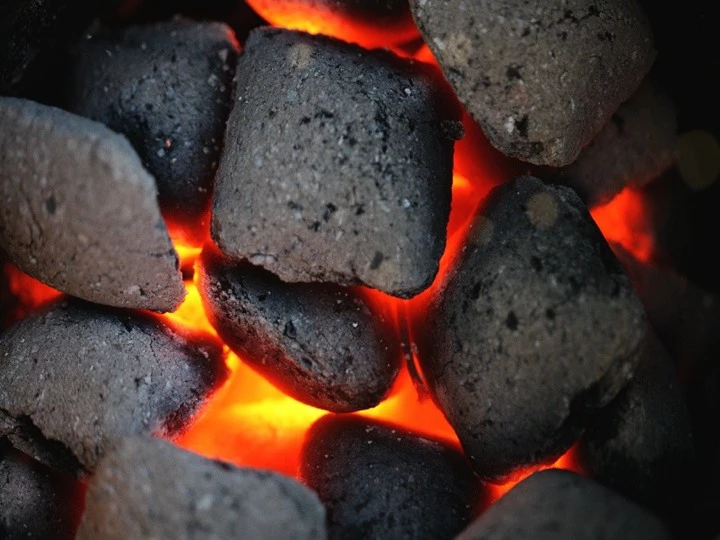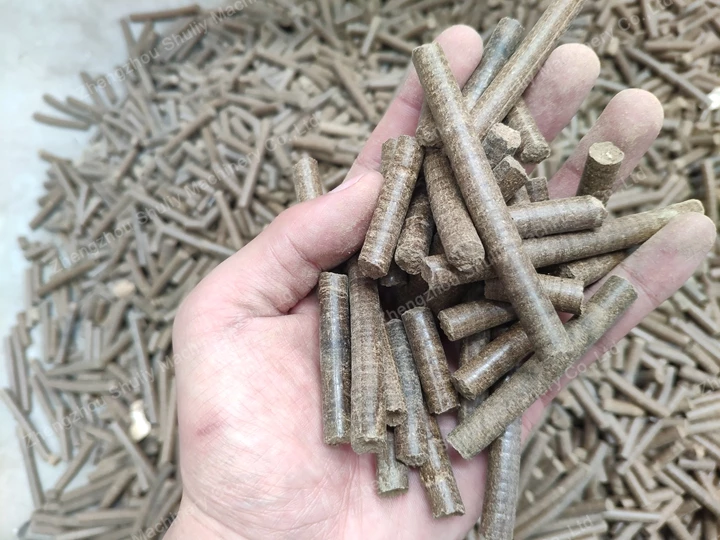
Agricultural waste is a valuable resource for producing renewable solid fuel. Materials such as rice husks, peanut shells, corn stalks, straw, and sawdust can be converted into biomass briquettes through compression.
These briquettes are easier to store, transport, and use as fuel than loose agricultural residues. So, how can you make biomass briquettes from agricultural waste? Here is a step-by-step guide.
Collect and Select Raw Materials
The first step is to collect suitable agricultural waste. Common raw materials for biomass briquette production include:
- Rice husks: A common byproduct of rice milling.
- Peanut shells: Suitable for biomass fuel production after crushing.
- Corn stalks: Agricultural residues that can be processed into smaller particles.
- Wheat straw: Widely available in agricultural areas.
- Sawdust: A byproduct of woodworking and timber processing.
- Coconut shells: Can be crushed and processed for biomass applications.
Different materials have different fiber structures and heating values. Therefore, raw material selection should depend on local availability and the desired fuel properties.
Crush the Agricultural Waste
Most agricultural residues are too large for direct briquetting. A crusher or hammer mill is used to reduce them into smaller, relatively uniform particles.
Proper particle size helps improve material feeding and compression. The required size depends on the briquette machine and the characteristics of the raw materials.
Dry the Raw Materials
Moisture content is an important factor affecting biomass briquette quality. Materials that are too wet may produce weak briquettes, while excessively dry materials may also affect forming performance.
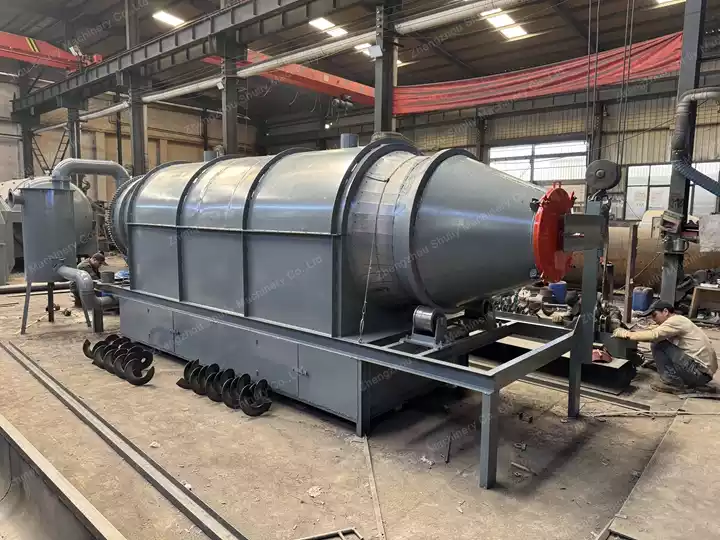
A rotary dryer or other industrial drying equipment can be used to control moisture content. The ideal moisture level depends on the material and briquetting process.
Compress Materials with a Briquette Machine
After crushing and drying, the prepared materials are fed into a biomass briquette machine.
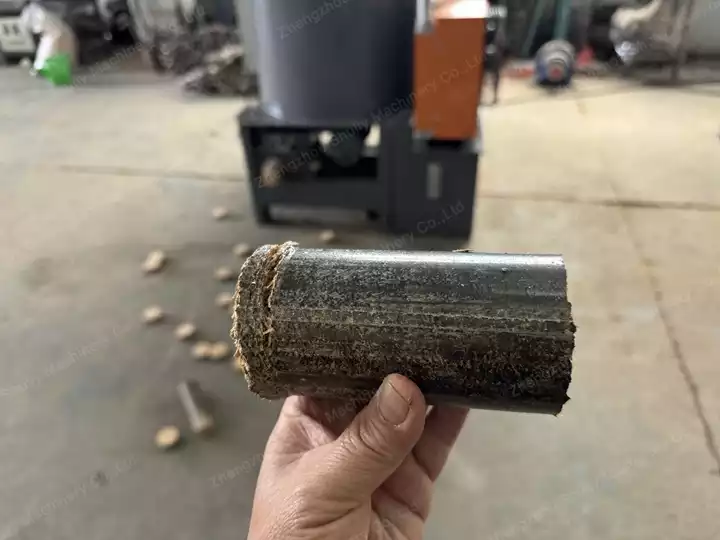
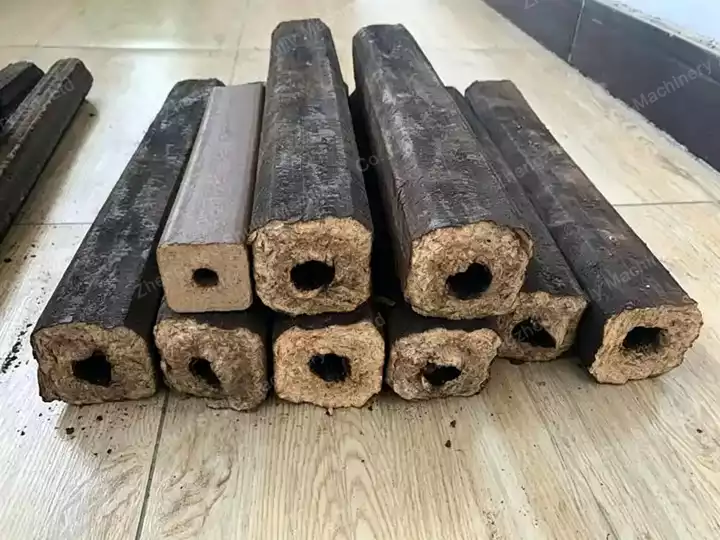
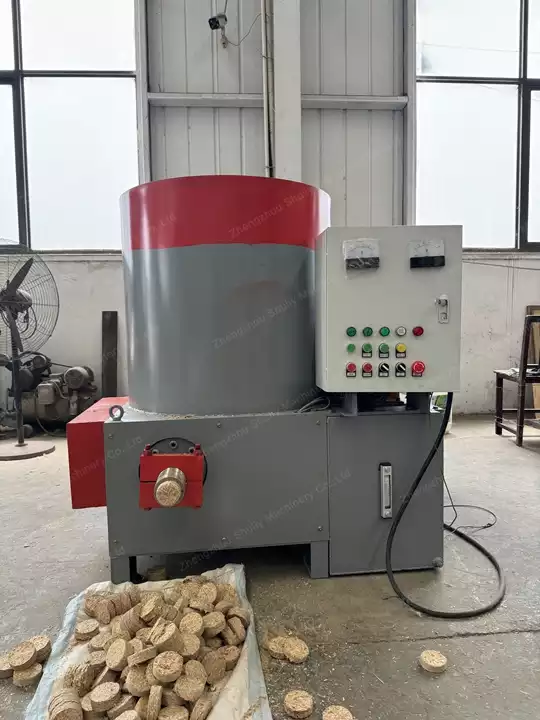
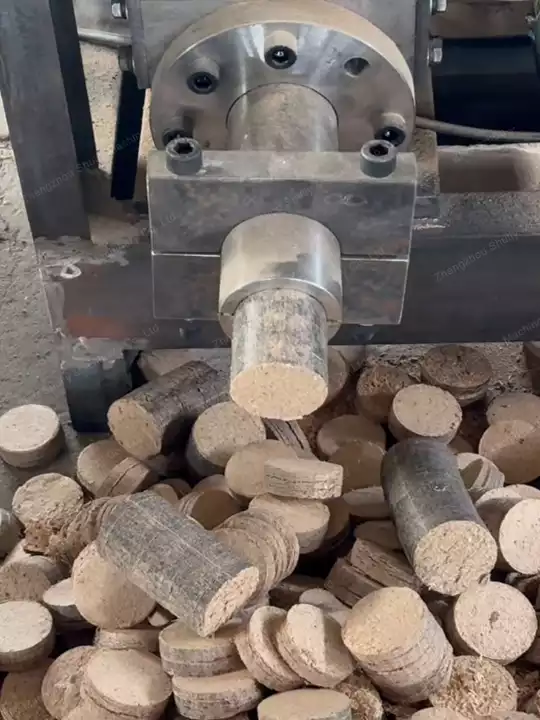
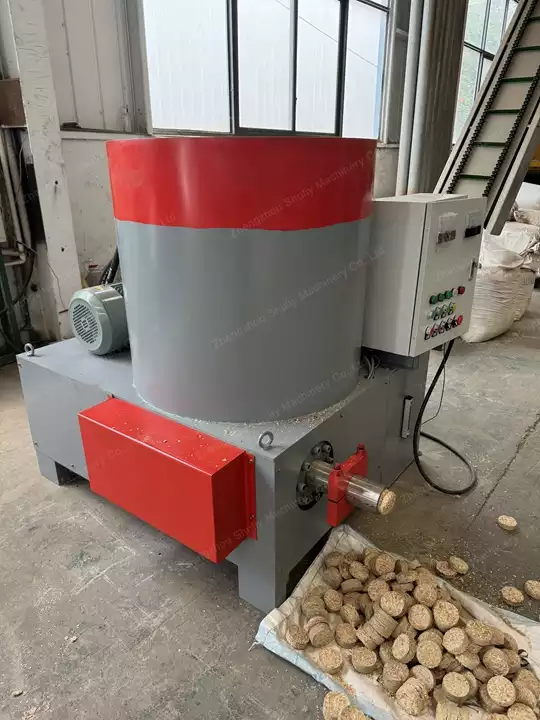
A hydraulic biomass briquette press uses hydraulic pressure to compress loose agricultural waste inside a forming chamber or mold. The pressure forces the particles together to produce compact, dense briquettes.
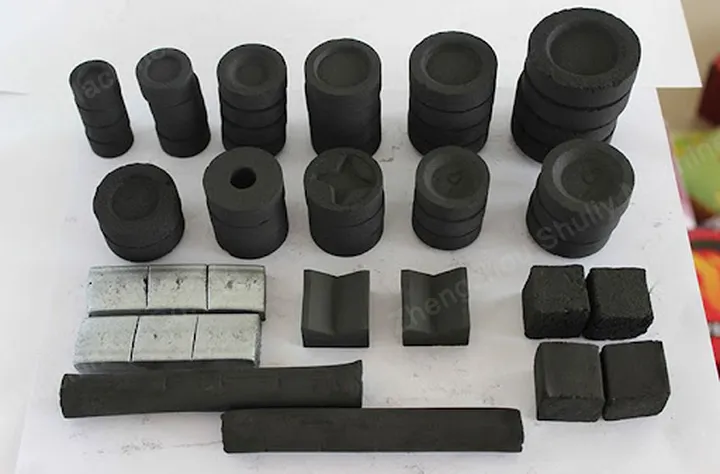
Depending on the machine design, the finished products can have different shapes and sizes.
Cool and Package the Finished Briquettes
Freshly formed biomass briquettes may need cooling before storage and packaging. Once sufficiently cooled and stabilized, they can be collected, packed, and stored in a dry environment to prevent moisture absorption.
Why Use Agricultural Waste to Make Biomass Briquettes?
Producing biomass briquettes offers several benefits:
- Waste Recycling: Converts agricultural residues into useful fuel.
- Reduced Storage Volume: Compressed briquettes take up less space than loose materials.
- Easy Transportation: Uniform shapes make handling and transportation more convenient.
- Additional Business Value: Agricultural waste can become a marketable biomass fuel product.
- Renewable Energy: Provides an alternative solid fuel for suitable heating and industrial applications.
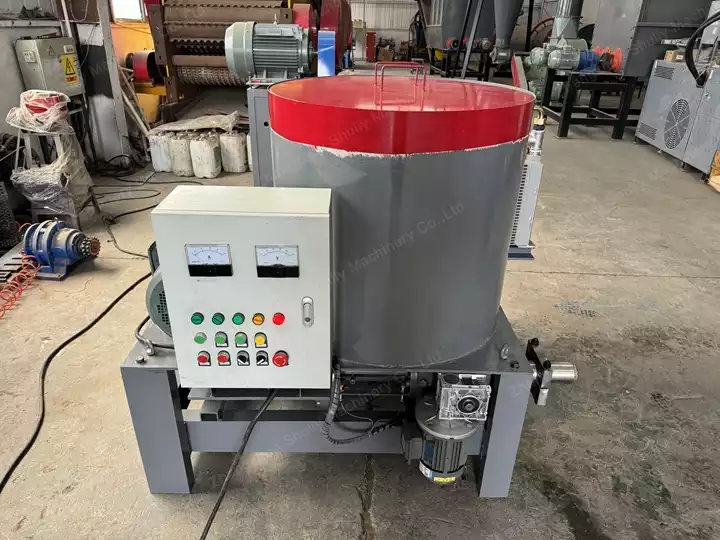
Making biomass briquettes from agricultural waste involves five main steps: raw material selection, crushing, drying, compression, and packaging. With a suitable hydraulic biomass briquette press and proper raw material preparation, agricultural residues can be transformed into valuable solid fuel.
If you are planning to start a biomass briquette production business, choosing the right briquette machine according to your raw materials and production capacity is essential. Contact us to learn more about our biomass briquette equipment and customized production solutions.